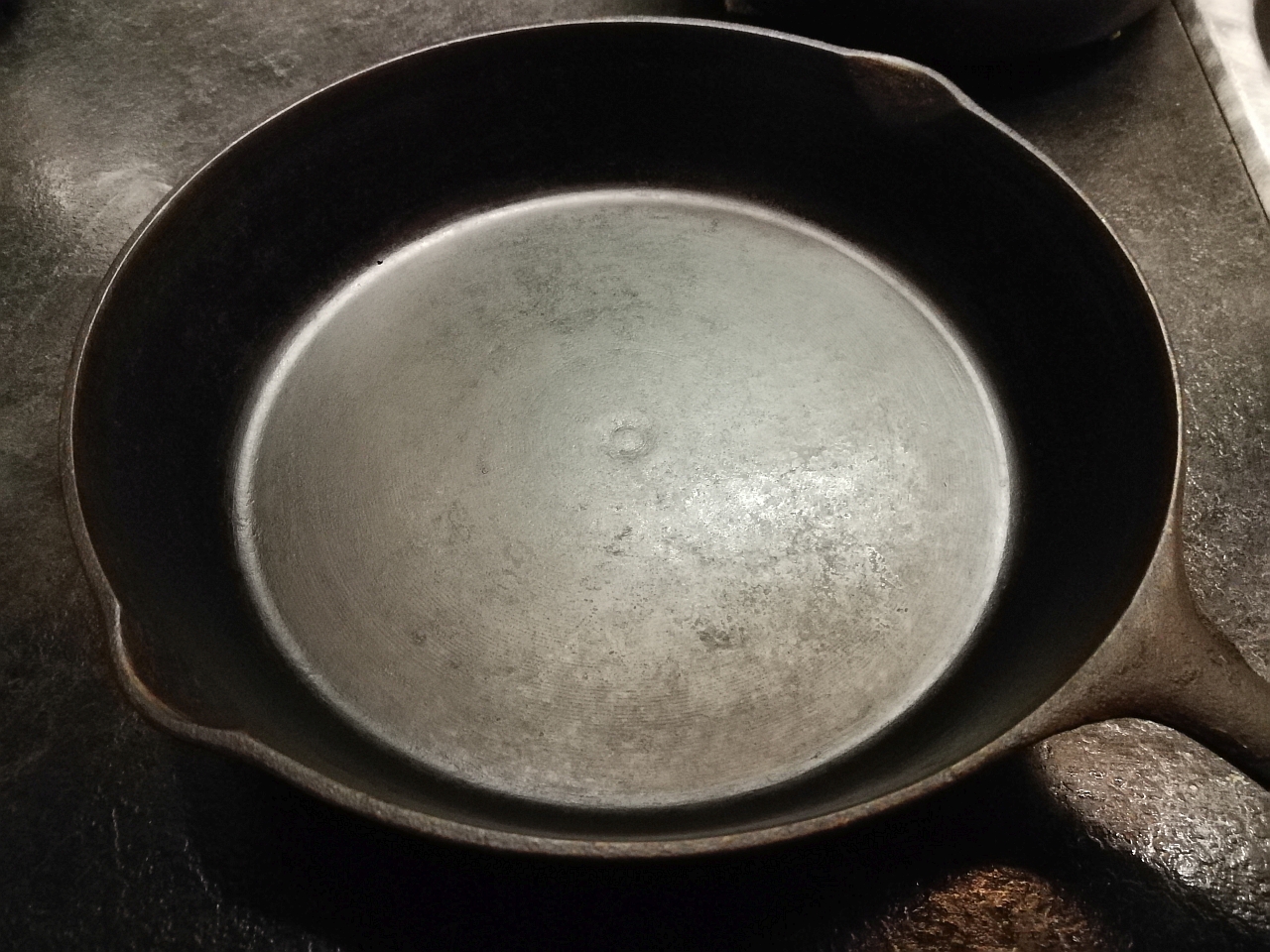
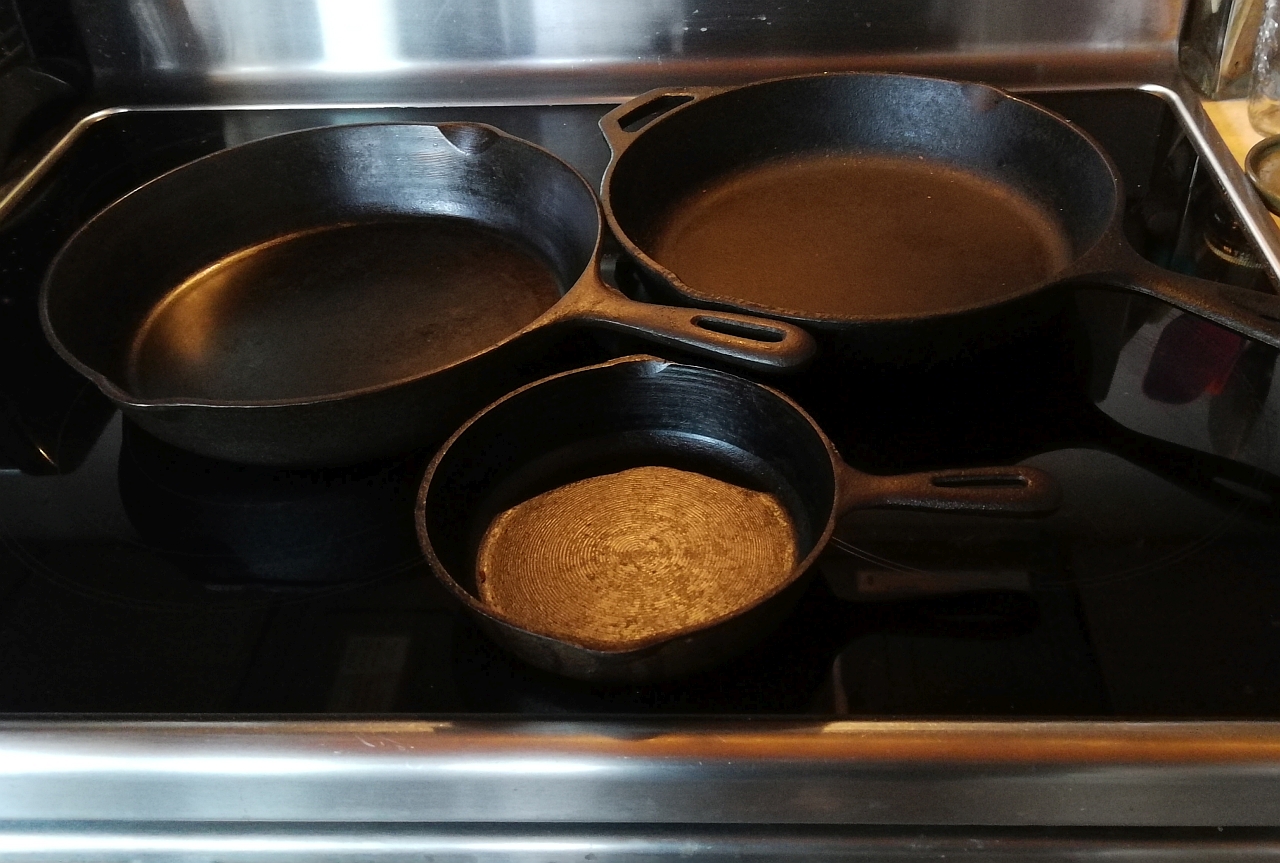
There seems to be a lot of fear and complexity around the use of cast iron in the kitchen. As you can see from the pictures in the recipes accessible through our overview page, we use cast iron pans all the time and have done so for decades. Cast iron is a wonder. Non stick, easy to clean, durable and healthy. What’s not to like?
But I bet you’ve heard a lot of fuss about the need to carefully season your pan, not ever to use soap, and don’t dare use it on a glass top stove. We’re here to tell you different. But first some basic points to help you understand cast iron.
Unlike stainless steel – which we also use for saucepans and heating liquids – cast iron is porous. Since it is cast and not rolled, there are very small pock marks or indentations even if the surface looks and feels fairly smooth. The trick to using cast iron is that these little spaces will hold some of the oils that are used in cooking, even after washing. That in effect is what “seasoning” is all about. If you heat the pan before adding oil, when stir-frying for example, you effectively ‘season’ the pan by opening the pores to let the oil enter more readily. This, by the way, also creates the non stick feature that makes these frying pans so wonderful to work with.
Granted, they will take longer to heat up but they also have much more even heat and hold the heat longer. Different manufacturers have different weights for your standard 12″ cast iron pan. We prefer the lighter ones made in Taiwan. They heat up more quickly and are easier to handle with one hand. As far as using it on a glass top stove, we do that every day. The trick is to make sure there are no sharp bits sticking out on the bottom of the pan. If in doubt, take a belt sander to the bottom and sand it smooth. Iron is much softer than glass so it won’t scratch your stove top – but if a piece of sand is embedded in the cast iron, and is protruding, that will.
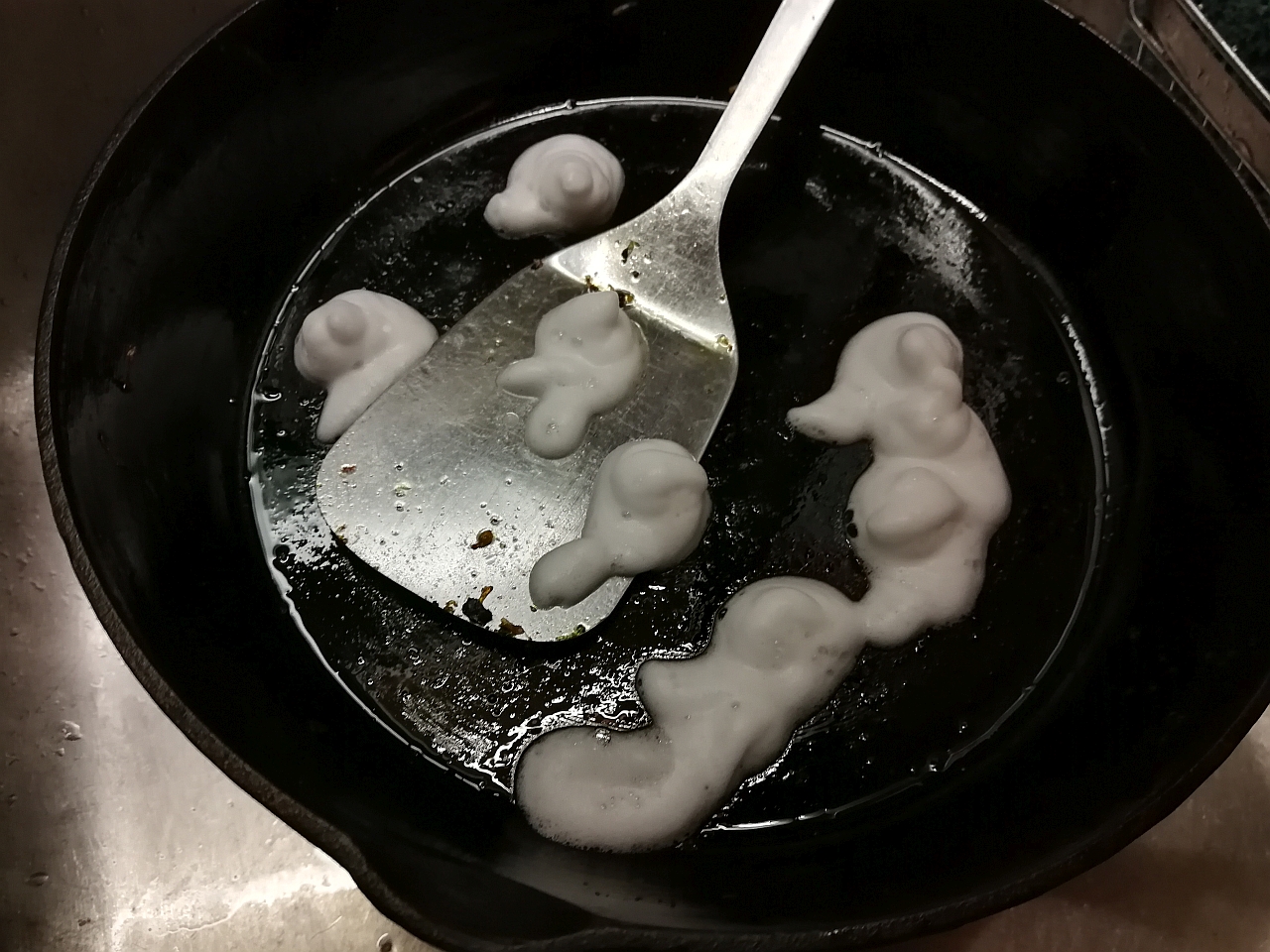
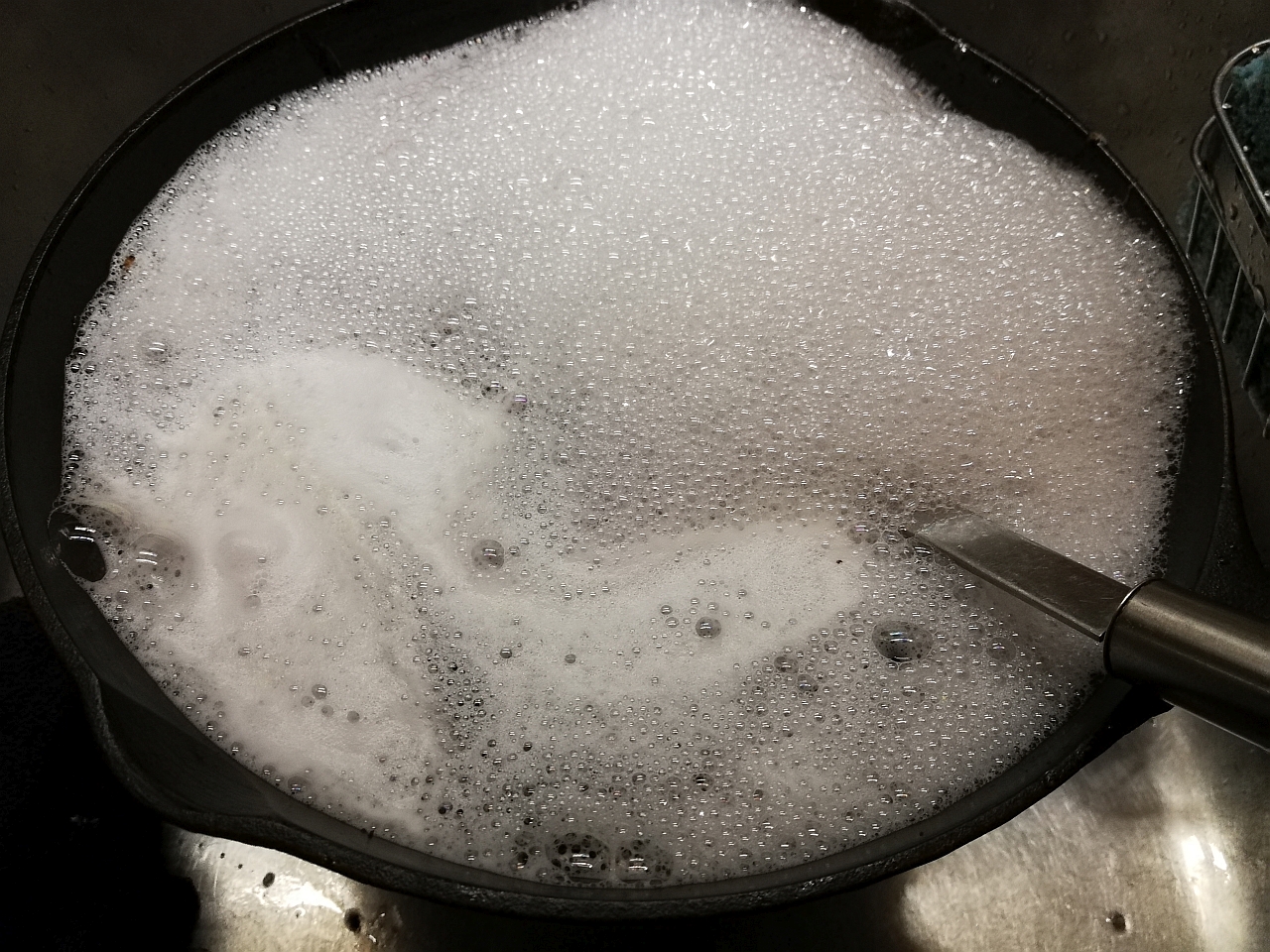
Ok, so here is how to clean your cast iron pan. After use, when some food residue is stuck from frying those potatoes to a crispy brown, simply soak the pan filled with soapy water for about 15 minutes. Don’t leave it overnight though. You won’t hurt the pan but your stainless steel sink may get a ring of rust from the pan unless you separate it with a dishrag or something.
Once the soaking is done, use a sponge, scratch pad or dish rag to wash the pan with soap. Rinse the pan thoroughly and rinse and wring out your dish rag. Simply wipe the pan dry with a slightly damp dish rag and voila – it’s ready for use again.
Questions? Email us: info@kandf.ca